Provenance:
Carlton Rochell Asian Art, New York
New York Private Collection, acquired in 2010
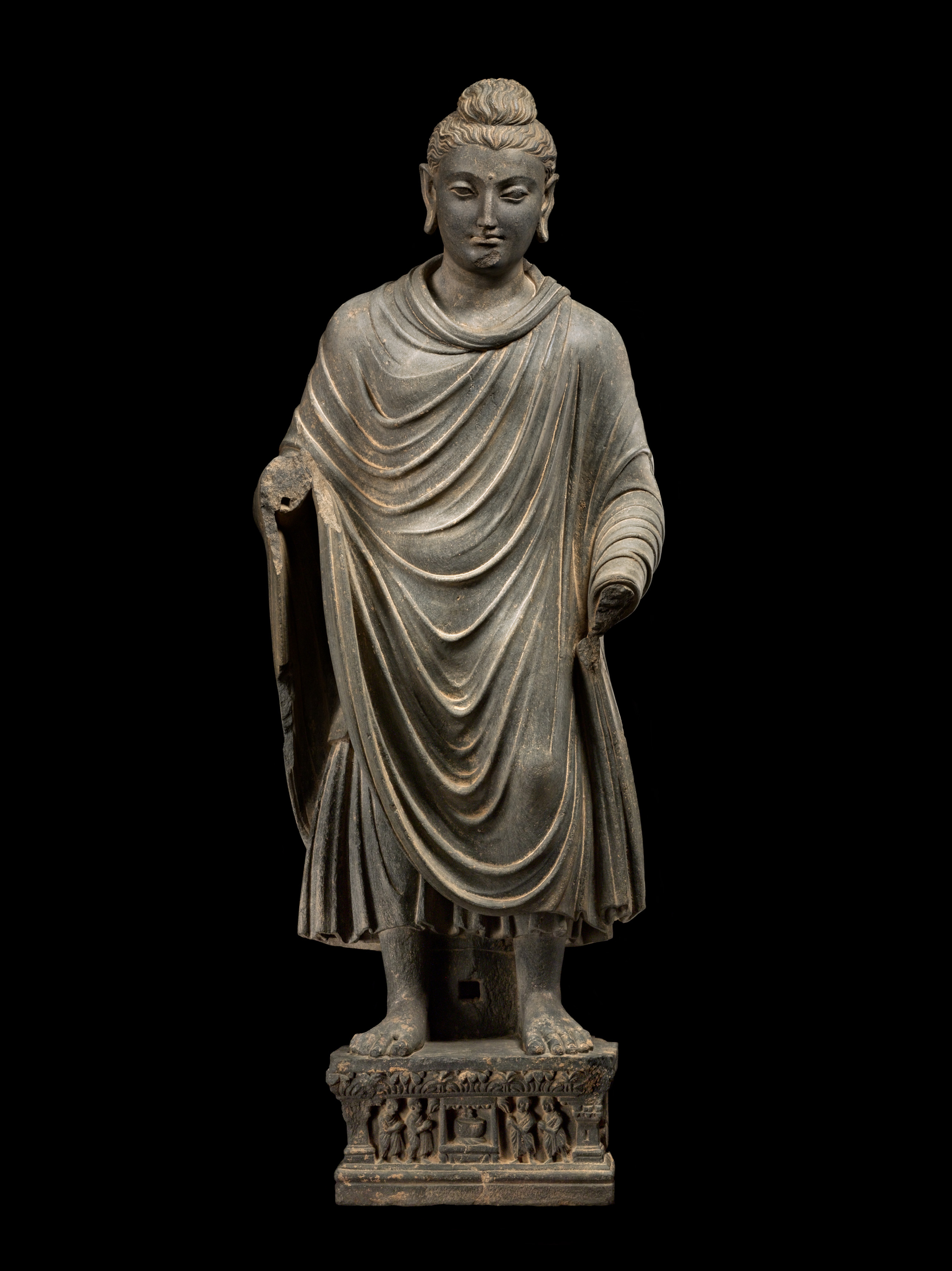
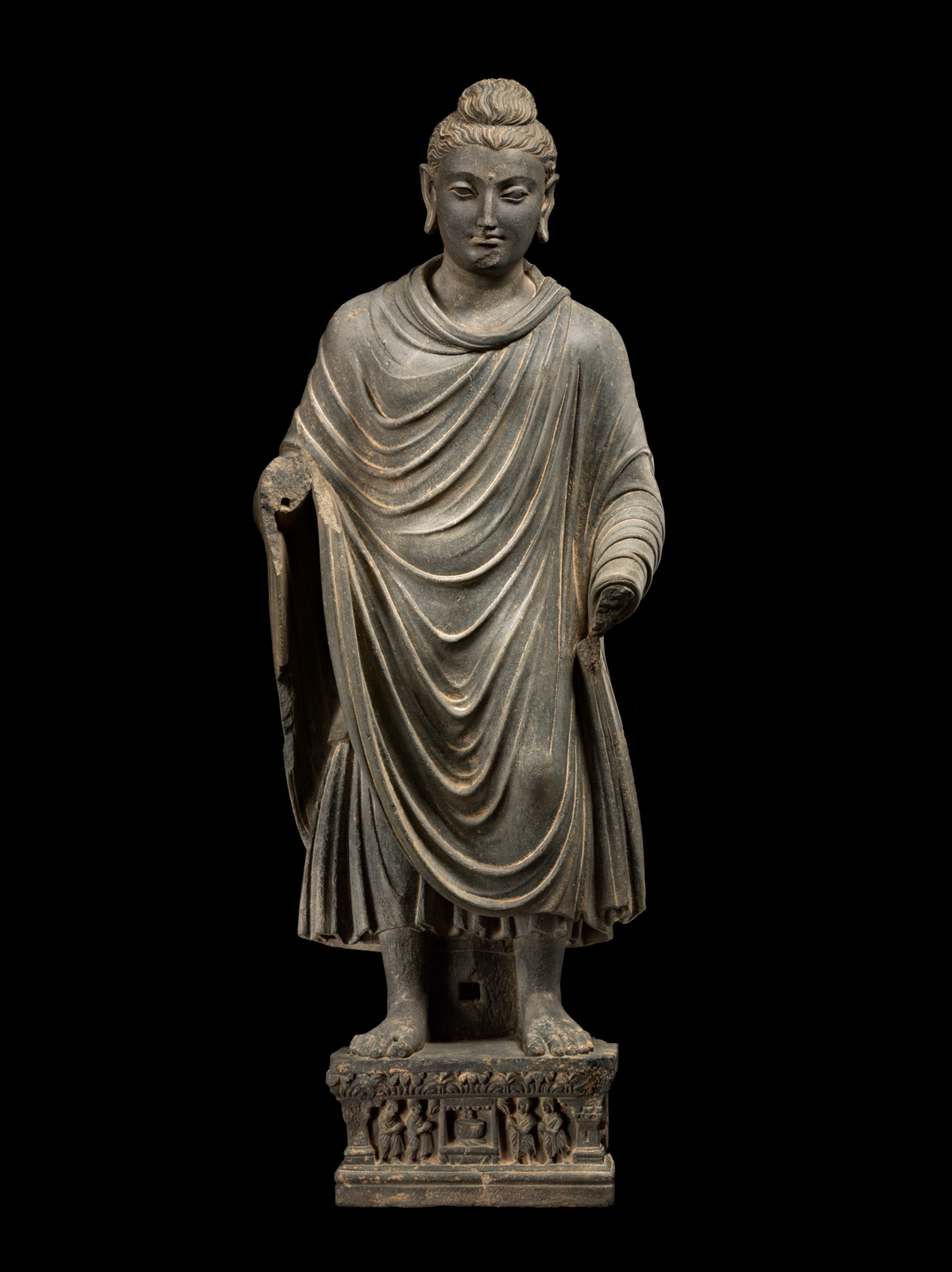
This standing Buddha exemplifies the refined naturalism and formal elegance characteristic of Gandharan Buddhist art. The figure is shown in a calm, frontal stance, with the right hand formerly raised in a gesture of reassurance (abhaya mudra) and the left holding the edge of the drapery. The serene facial expression, downcast eyes, and softly-modeled features convey a sense of spiritual introspection and compassionate presence. Subtle attention to anatomical proportion and surface modeling reveals a sophisticated sculptural tradition that blends symbolic meaning with a heightened sense of realism.
The integral base is carved in low relief with a narrative frieze of attendant figures and architectural motifs, likely representing devotees or bodhisattvas flanking a central shrine or stupa. This iconographic program situates the Buddha within a devotional and ritual context, reinforcing his role as the focal point of worship and underscoring the performative and communal dimensions of Gandharan Buddhist practice.
Gandhara, situated at the crossroads of South Asia, Central Asia, and the Mediterranean world, developed a highly-syncretic visual language during the early centuries of the 1st millennium, blending Hellenistic naturalism with Buddhist symbolic and doctrinal concerns.